Govern Data Once. Trust It Everywhere
From asset control to audit trails, welcome enterprise-grade data governance and bid farewell to the operational complexities







Platform that lets data talk to machine, systems, and you
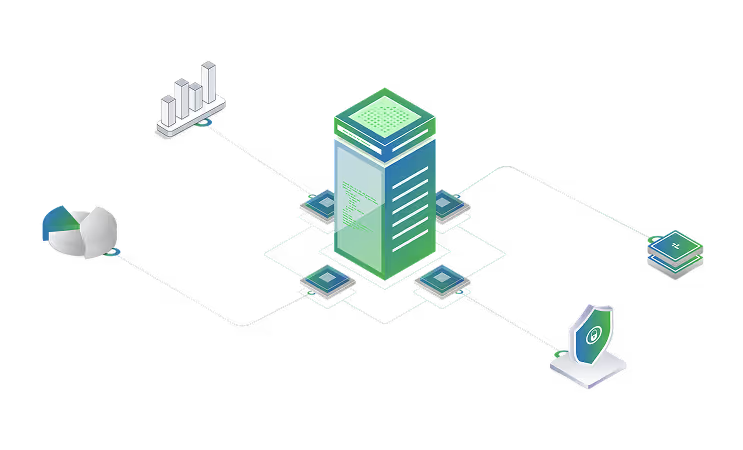
Data silos trouble your teams, engineering can't have raw access for diagnostics, operations seek SLA guarantees, compliance mandate immutable audit trails, and security require encryption everywhere—Flex83 solves for all through comprehensive end to end data pipeline management
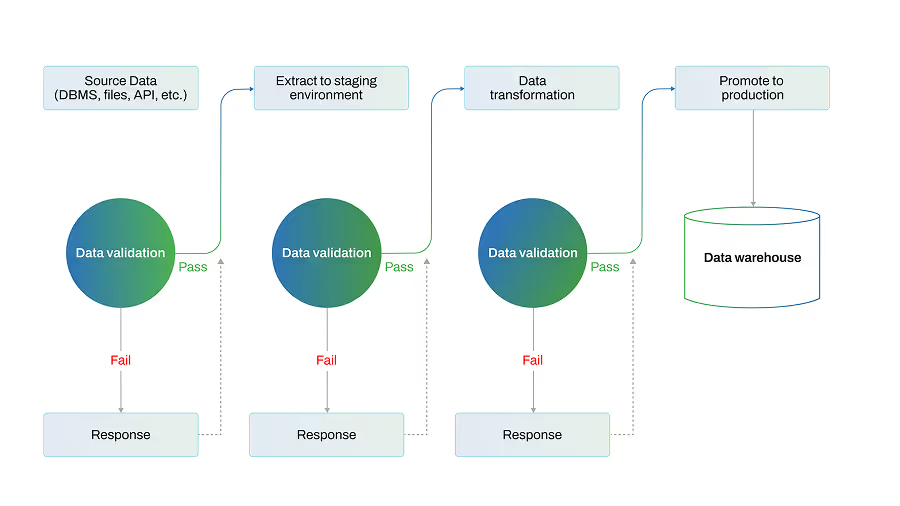
Every data point that enters the system passes through authentication, ontology, validation, and data lineage tracking
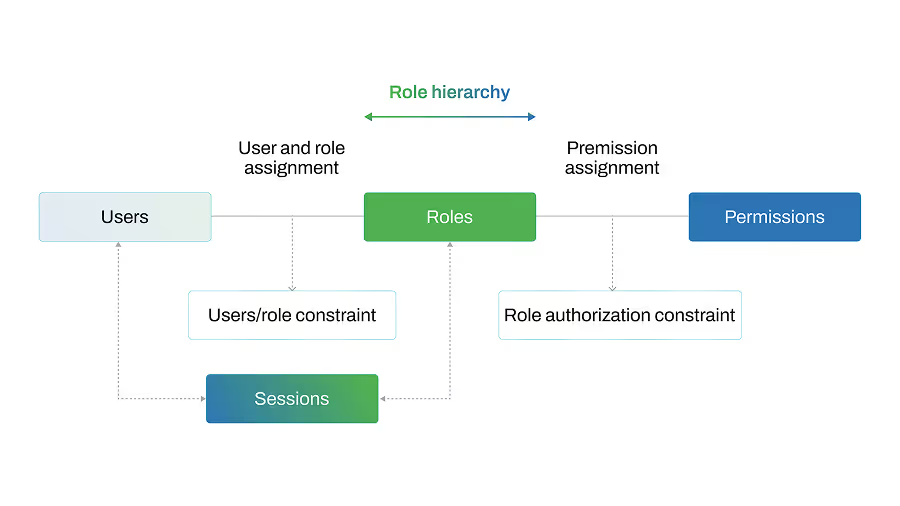
Field-level encryption for sensitive attributes, role-based access per connected asset class, tiered retention policies per data sensitivity, and custom audit rules
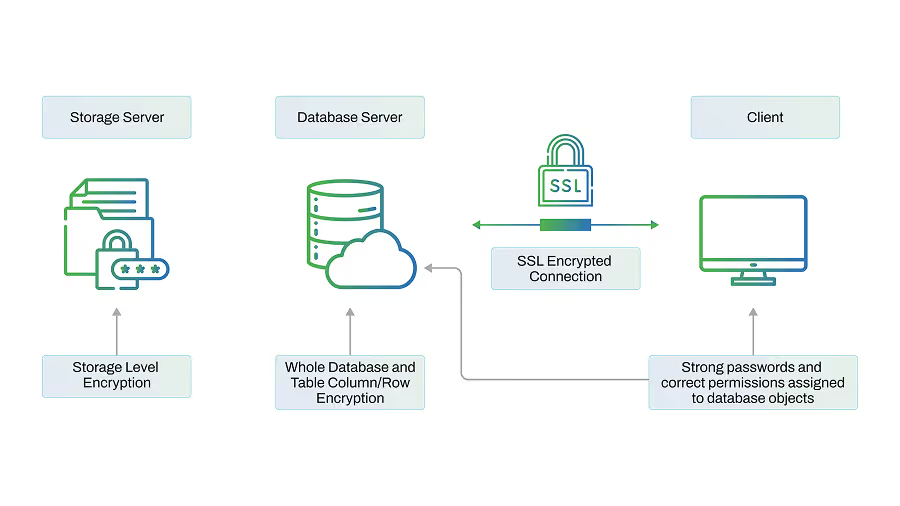
Encrypted data, secure data lineage from source to consumer, tamper-proof audit trails, on a platform adaptive to various international standards.
Personalize Data Experiences
Empower every stakeholder—engineers, analysts, and compliance teams—with tailored, secure data access through intelligent role-based access control.
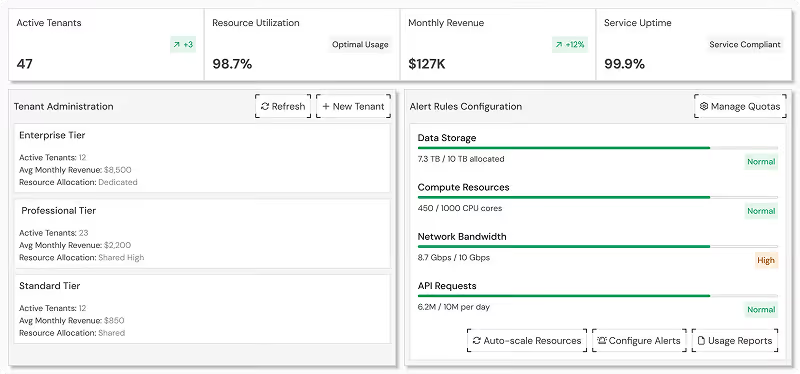
Unified sign-on for global teams. Secure, localized access by region, role, or plant—enabling real-time security monitoring across all deployment environments.
.avif)
Unified sign-on for global teams. Secure, localized access by region, role, or plant—enabling real-time security monitoring across all deployment environments.
.avif)
Field, row, and asset management specific policies ensure sensitive data stays protected—no matter how much your scale.
Govern the Full Data Lifecycle
Automate data governance by connecting every asset, process, and record under self-managing rules.
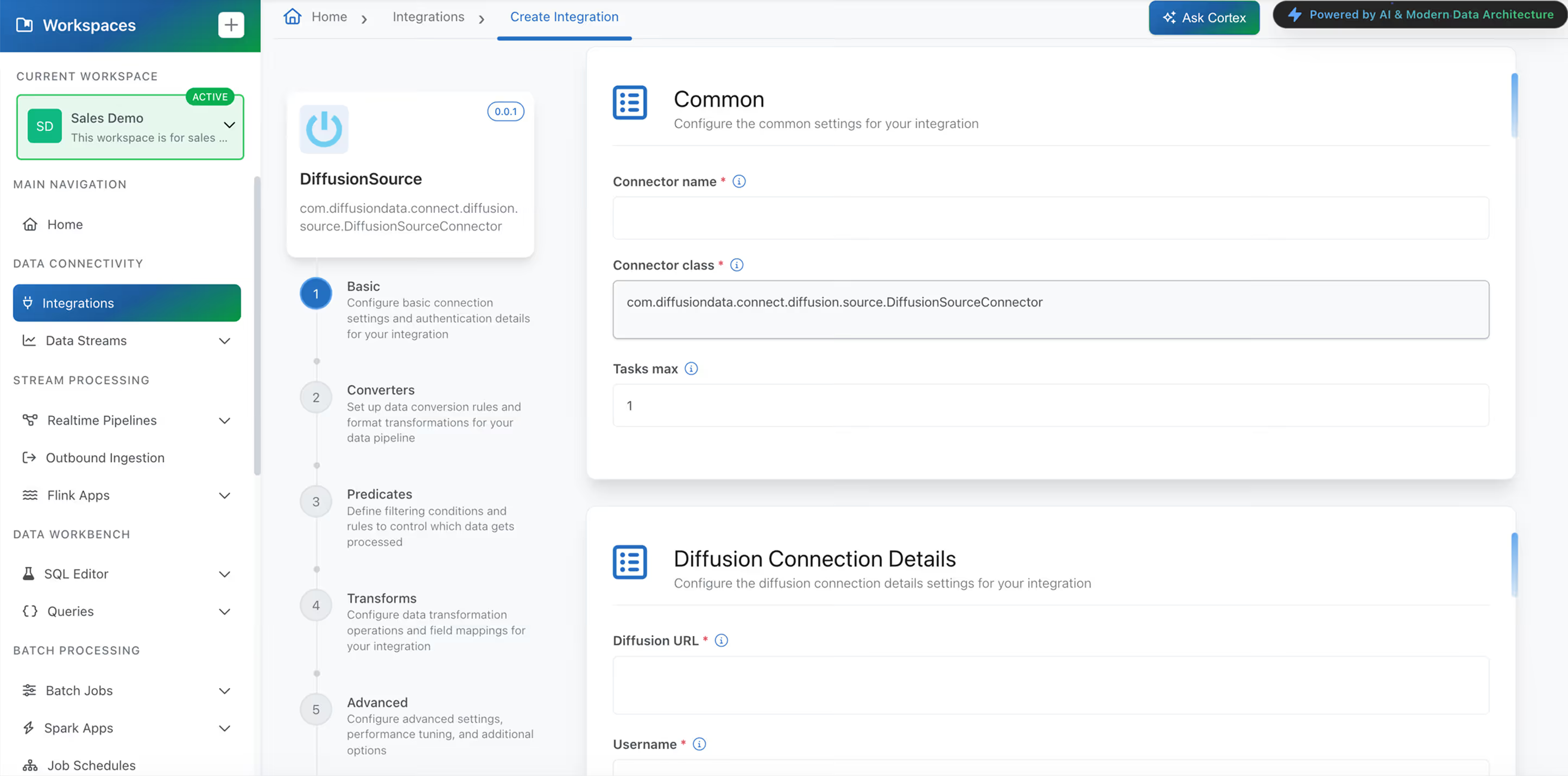
Pre-built connectors bridge fragmented IT and OT systems, ensuring real-time data ingestion and protocol translation across all stakeholders.
.avif)
Organize data and physical assets, providing real-time visibility, automated mapping, and streamlined operational control.
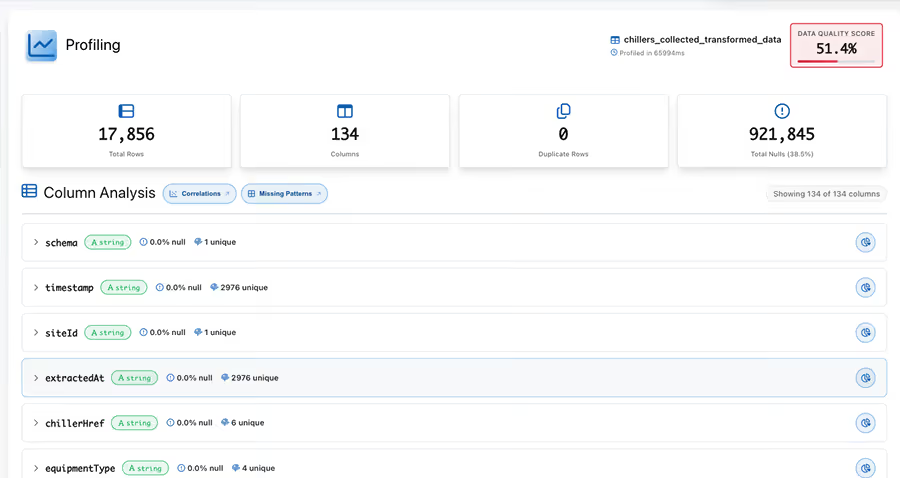
Automated profiling tags and indexes incoming data on the fly, creating a searchable, lineage-tracked repository that accelerates secure data discovery.
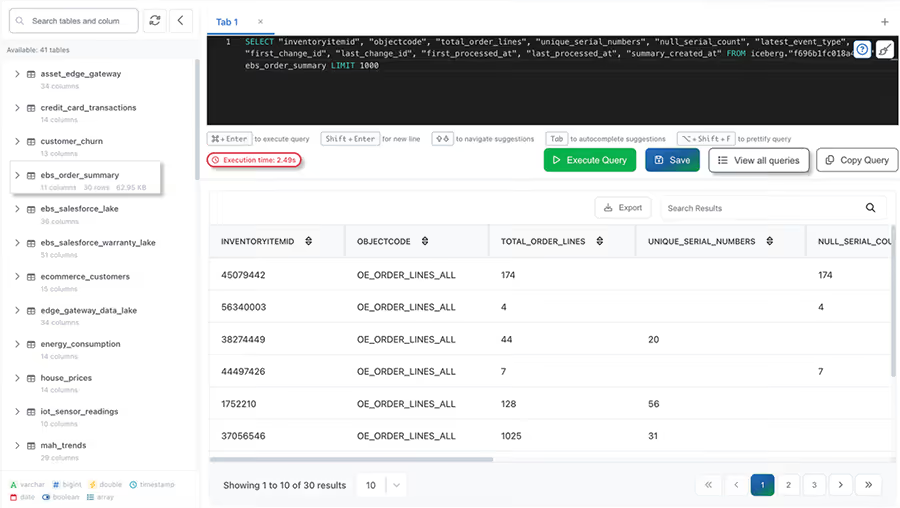
Lakehouse architecture unifies operational, analytical, and historical IoT data for seamless policy enforcement and scalable data storage.
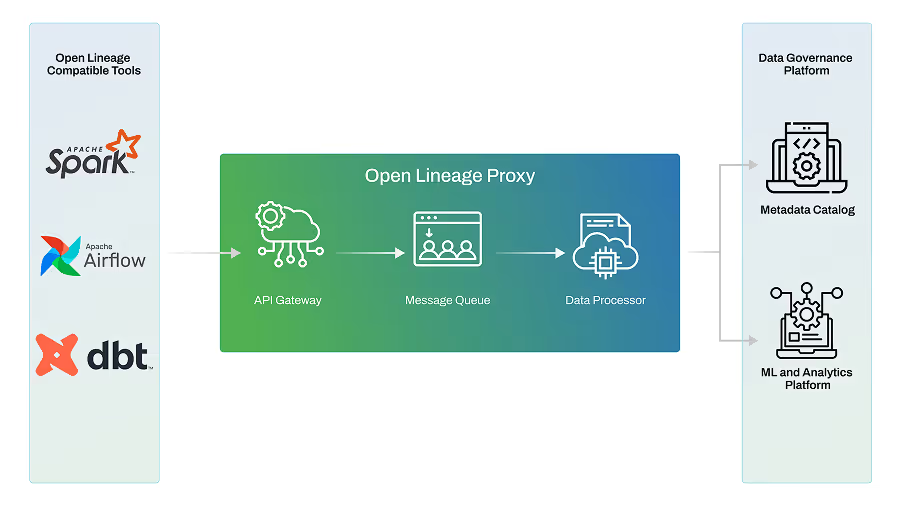
Visualize how raw edge data evolves into actionable insight. Track provenance, see dependencies, and comply with every audit step.
Protect, Validate, and Audit
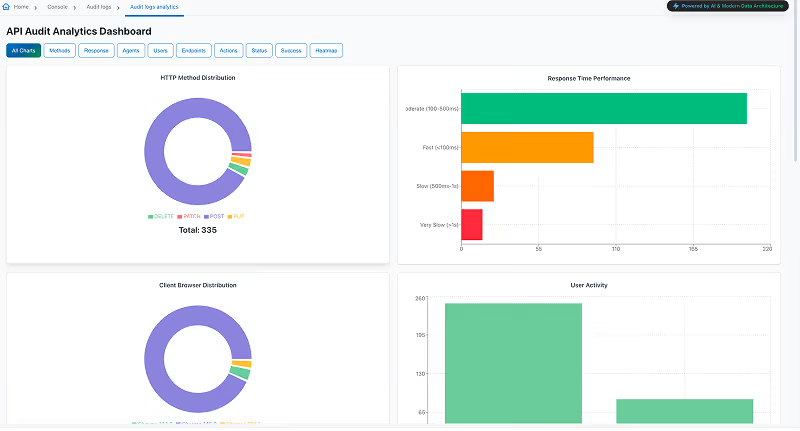
Build trust and resilience into every transaction and data flow through data pipeline security and continuous real-time security monitoring
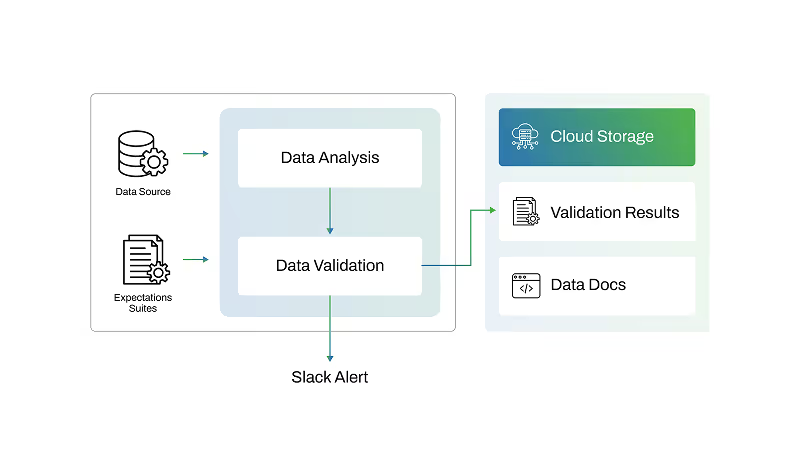
Enforce business logic, schema, and contract checks before data processing moves downstream. Alerts for violations with automated data governance solutions and corrective workflows.
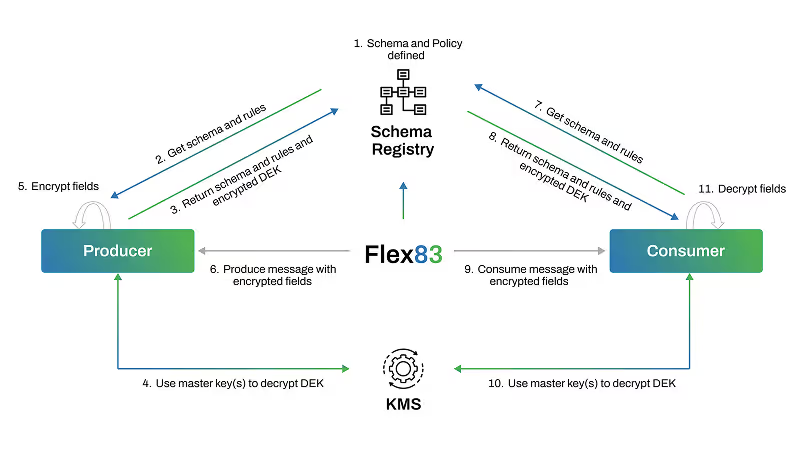
Every data point that enters the system passes through authentication, ontology, validation, and data lineage tracking
Trusted by global enterprises you already aware of

Head of Product, Actiontec
The FLEX83 as an Application Enablement Platform (AEP) was easily customized to handle our sophisticated and high-scale application. The IoT83 team worked with us to deliver this high-quality solution in a very short time.

Networks
IoT83 is revolutionizing the industrial IoT by enabling digital transformation with its secure & scalable platform (Flex83), its application tools, and agile services, streamlining the big data deployments in a cost-effective manner for a faster and increased ROI.

Product Lead
The software is very easy to use & intuitive. FLEX83 has been extremely helpful & committed to nVent success moving the company forward with connecting our legacy installed controller base to the cloud platform.

Electronics
IoT83's cloud platform (Flex83) enabled Vision AI applications on Renesas Virtual Lab's RZ/V series MPUs. It supports RZ/V2M and RZ/V2L evaluation boards, using standard ONNX models and a DRP-AI translator. This solution performs AI inference while delivering metrics like FPS, FPS/Watt, and Inference Time.
American Appliance, OEM
When working with Flex83, you are not just getting a world-class Application Enablement Platform (AEP), you are also gaining access to some of the brightest Dev Minds in the cloud space. It added immense value to our operations.
Global Industrial Manufacturer
We operate across more than a million connected assets, and our problem was never too little data; it was data scattered across too many systems. What worked for us wasn't a rip-and-replace platform, but one that sat on top of what we already ran and pulled everything into a single real-time view. Along with that, we kept full ownership of our data and IP, went from idea to deployment far faster than expected, and at a fraction of the hyperscaler cost.
Head of Product, Actiontec
The FLEX83 as an Application Enablement Platform (AEP) was easily customized to handle our sophisticated and high-scale application. The IoT83 team worked with us to deliver this high-quality solution in a very short time.
Networks
IoT83 is revolutionizing the industrial IoT by enabling digital transformation with its secure & scalable platform (Flex83), its application tools, and agile services, streamlining the big data deployments in a cost-effective manner for a faster and increased ROI.
Product Lead
The software is very easy to use & intuitive. FLEX83 has been extremely helpful & committed to nVent success moving the company forward with connecting our legacy installed controller base to the cloud platform.
Electronics
IoT83's cloud platform (Flex83) enabled Vision AI applications on Renesas Virtual Lab's RZ/V series MPUs. It supports RZ/V2M and RZ/V2L evaluation boards, using standard ONNX models and a DRP-AI translator. This solution performs AI inference while delivering metrics like FPS, FPS/Watt, and Inference Time.
American Appliance, OEM
When working with Flex83, you are not just getting a world-class Application Enablement Platform (AEP), you are also gaining access to some of the brightest Dev Minds in the cloud space. It added immense value to our operations.
Global Industrial Manufacturer
We operate across more than a million connected assets, and our problem was never too little data; it was data scattered across too many systems. What worked for us wasn't a rip-and-replace platform, but one that sat on top of what we already ran and pulled everything into a single real-time view. Along with that, we kept full ownership of our data and IP, went from idea to deployment far faster than expected, and at a fraction of the hyperscaler cost.

Niclas Anderson
VP Sales, Vitronic
Frequently Asked Questions
Can Flex83 integrate with our existing identity provider?
Yes. Flex83 supports SAML 2.0 and OIDC, enabling seamless SSO integration with Okta, Azure AD, Google Workspace, Ping Identity, and other enterprise identity providers (IdPs). We also support LDAP and Active Directory for on-premises environments, supporting hybrid data pipeline management scenarios.
What happens if mobile devices lose connectivity in the field?
Technicians can access downloaded asset data, procedures, and forms—completing work without connectivity. Changes sync automatically when connection restores. Conflict resolution handles overlapping edits gracefully.
How do we control what data field technicians can access?
Role-based access control (RBAC) extends to mobile interfaces. Define permissions by user role, asset class, location, or customer relationship. Technicians see only assigned work orders and related assets. Sensitive financial or strategic data remains restricted. White-labeled customer portals enforce multi-tenant isolation automatically.
Can customers access real-time data on equipment we service for them?
Absolutely. Flex83's white-labeled customer portal provides asset health dashboards, service history, predictive alerts, and self-service request submission. You control exactly what data customers see—down to individual sensors or metrics— enabling a brand experience as your service offering, not a third-party tool.
How does pipeline observability help reduce operational costs?
Visibility into data pipeline costs reveals expensive queries, over-retained data, and inefficient processing. Typical optimizations include: archiving cold data to lower-cost storage (40% savings), optimizing query patterns (30% compute reduction), eliminating duplicate data flows (20% network savings). Most customers reduce infrastructure costs 30-40% within the first few quarters.
How does Flex83 handle safety-critical operational data?
Safety-critical data receives elevated governance: immutable audit logs, mandatory approval workflows, field-level encryption, and compliance-ready retention policies. Define safety interlocks that prevent unauthorized changes to critical parameters. Full traceability from operator action to system response satisfies regulatory requirements.
What's the typical ROI timeline for industrial operations transformation?
Quick wins appear within weeks (mobile work orders, real-time visibility). Measurable ROI typically emerges within 3-6 months (reduced downtime, improved technician productivity). Transformational impact (predictive operations, autonomous workflows) compounds over 12-18 months. Most customers achieve 3-5x ROI within 2 years.
Can we phase deployment across multiple plants or regions?
Yes. Multi-tenant architecture supports phased rollout with isolated environments per site. Start with pilot facility, validate ROI, then replicate configuration to additional locations. Centralized governance ensures consistency while allowing site-specific customizations. Scale from 1 to 100+ facilities without architectural changes.