Smart Irrigation
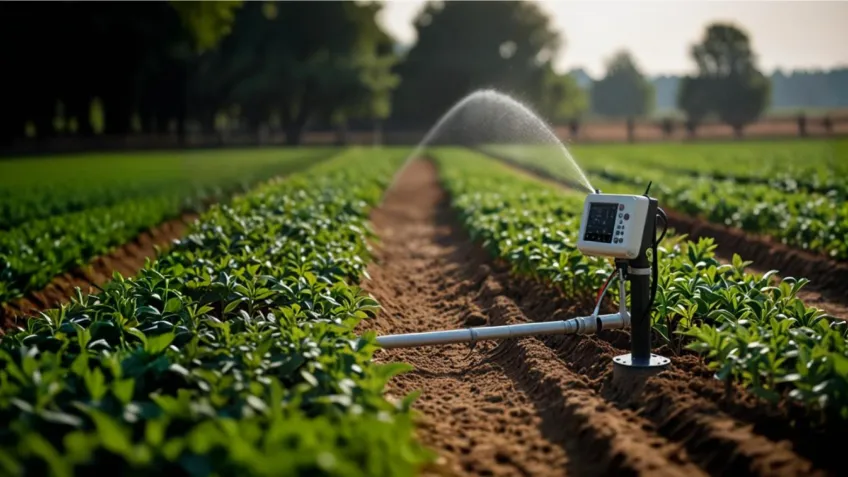
Smart Irrigation
Smart irrigation systems have transformed the way of water usage and prevention in agriculture. With the advent of new technologies, these systems offer numerous that totally defer from traditional systems, thereby improving plant health and soil condition, environmental sustainability.
Communication Mode

4G/5G Cellular Networks

LoRaWAN (Long Range Wide Area Network)

Wi-Fi

IoT Sensors
Benefits of Smart Irrigation

Water Conservation
By monitoring real-time soil moisture levels and weather conditions, smart irrigation systems only apply the exact amount of water needed, significantly reducing water wastage. This ensures that water resources are preserved and optimally utilized.
Environmental Sustainability
Smart irrigation contributes to sustainable agriculture by minimizing the overuse of water. Reduced water usage lowers energy consumption (for pumping and distribution), helping to mitigate the environmental footprint of agricultural activities.
Improved Crop Health and Yield
By delivering precise amounts of water to crops based on their needs, smart irrigation promotes healthier plant growth. Maintaining optimal soil moisture levels enhances nutrient uptake, leading to improved crop quality and higher yields.
Reduced Labor Costs
Farmers and landscapers can remotely control and monitor their systems, freeing up time and resources for other tasks and reducing operational costs
Waste Reduction
Eliminate over-watering and runoff, reducing the wastage of both water and fertilizers.
How To Get It With Flex83
Automation
Automated systems that deliver indicators and notifications about soil moisture degrees, allowing for proactive control without control.
Cost savings
Continuous checks on possible water leaks or malfunctions inside the irrigation network allows well-timed preservation and prevention of water loss which reduces water bills.
Weather-based smart irrigation controllers
Gather local weather information and make irrigation run-time adjustments so the landscape receives the appropriate amount of water.
Soil moisture sensors
In built sensors to accurately determine the moisture level in the soil which is used to stop/initiate irrigation according to the soil moisture.
Drip/Sprinkler system
The irrigation system may consist of drip lines or sprinklers strategically placed in the field or garden to distribute water evenly to the plants.
Get Your Commercial-ready IoT Solution in 83 Days
Focus on the use case realization while we handle the heavy lifting for the platform. Let’s explore how we can bring your solution to life—book a meeting today.