
Transforming Asset Performance Management: Five Questions for Every Industrial Leader


How Fast Industry is Shifting to Data-First APM
- “By 2027, over 80% of asset-intensive organizations are forecasted to rely on advanced analytics and AI for critical APM decisions.”
- “Firms using integrated data models achieve 15-20% longer asset lifespans over laggard peers.”
New waves of digitization, the explosion of IoT connectivity, and advancements in analytics are redefining what’s possible in asset-heavy industries.
Data is no longer a byproduct—it’s the new engine of performance, safety, and efficiency.
But what separates forward-looking industrial leaders from those struggling to keep pace? It’s asking, and answering, the right questions about data.
Where Data Delivers Value in Asset Performance Management
PIE CHART
Industrial Leaders See Tangible ROI from Data-Driven APM
GRAPH
Executive should ask these questions to drive meaningful business transformation through data-driven Asset Performance Management (APM).
Speed matters. Industrial winners don’t just collect data—they act quickly to identify hidden trends, failure signals, and optimization opportunities.
Are legacy systems and siloed data still holding the organization back? How quickly can insights—from sensor anomalies to cost-saving maintenance triggers—be detected and acted upon?
Leading enterprises have reduced unplanned downtime by up to 20% within the first year of implementing real-time, data-driven APM platforms.
Tomorrow’s APM is predictive, not reactive. What the leaders should ask their team is:
- Are analytics, AI, and digital twins systematically rethinking failure models, resource allocation, and CAPEX decisions?
- Which asset classes present the strongest opportunities for data-enabled innovation.
- How does the organization prioritize these efforts?
The most advanced companies use prescriptive analytics to recommend interventions before problems occur, fundamentally changing maintenance economics and asset reliability.
Every competitor can buy technology, but competitive advantage comes from how asset data is turned into business value.
Modern leaders are just asking the right questions:
- Are there unique ways the organization blends internal and external data to optimize uptime, lifecycle performance, or compliance?
- What intellectual property or advanced models is the team building that no one else can replicate?
Systems and sensors can’t transform the business alone. Has the company redesigned processes from the ground up, enabling frontline teams to act on insights and close the loop on asset performance? Are skills, incentives, and governance evolving to support experimentation, rapid iteration, and accountability for outcomes? These are the necessary questions that needs to be asked.
Leaders set the tone. They can ask questions such as:
- Are executives championing a vision where data is as fundamental as equipment or capital?
- Is there visible buy-in across business units, and are success stories celebrated and scaled?
- Are investments in training, technology, and partnerships being made to build durable organizational muscle?
ANIMATED SECTION
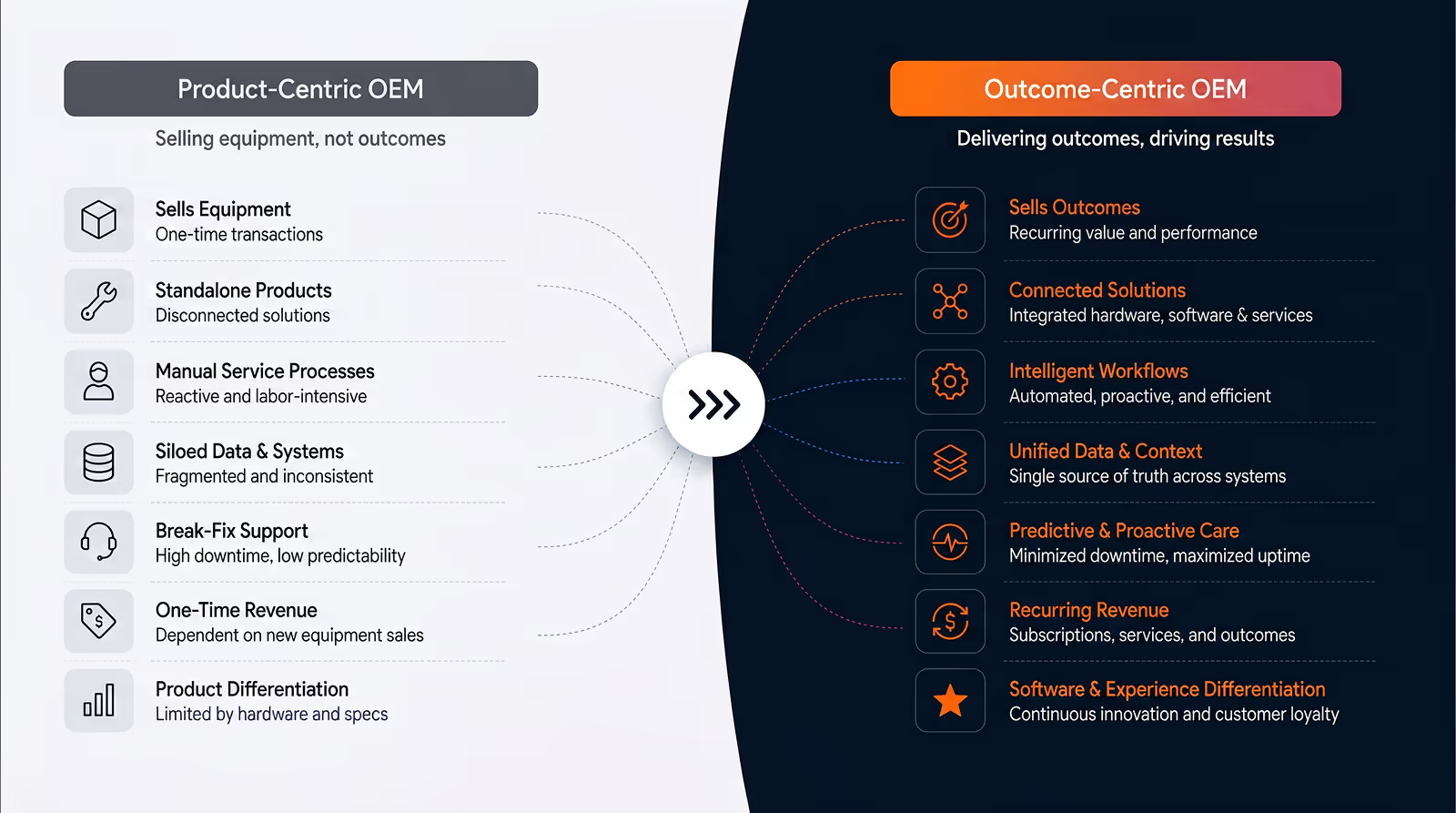
It’s Time for Businesses to Move from Reactive to Predictive to Prescriptive
- Isolated Data Sources → Centralized Data Repositories
- Descriptive Analytics (What happened?) → Predictive Analytics (What’s likely?)
- Prescriptive Analytics (What should we do?)
Comparative Table: “Barriers to Data-Driven APM vs. Overcoming Them”
ANIMATED GRAPH
Where Will You Take Your Asset Data Next?
Leaders in asset performance aren’t satisfied with sporadic wins. They make data-driven action a core strategy—challenging their people to keep asking tough questions and turning answers into sustained competitive advantage.

.avif)
.avif)