Make the Customer the Product Manager of Their Own Assets
Industrial customers expect what consumer software has trained them to expect: real-time visibility, self-service, transparency, and outcomes — not invoices. Flex83 gives industrial OEMs and operators the platform to deliver exactly that, under their own brand.
Trusted by teams at global enterprises
for industrial data and asset ecosystem









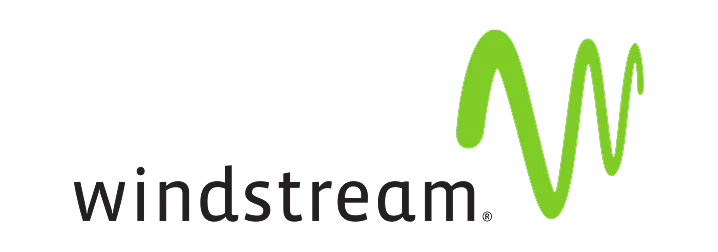





Industrial Customer Experience Lags the Rest of the Market
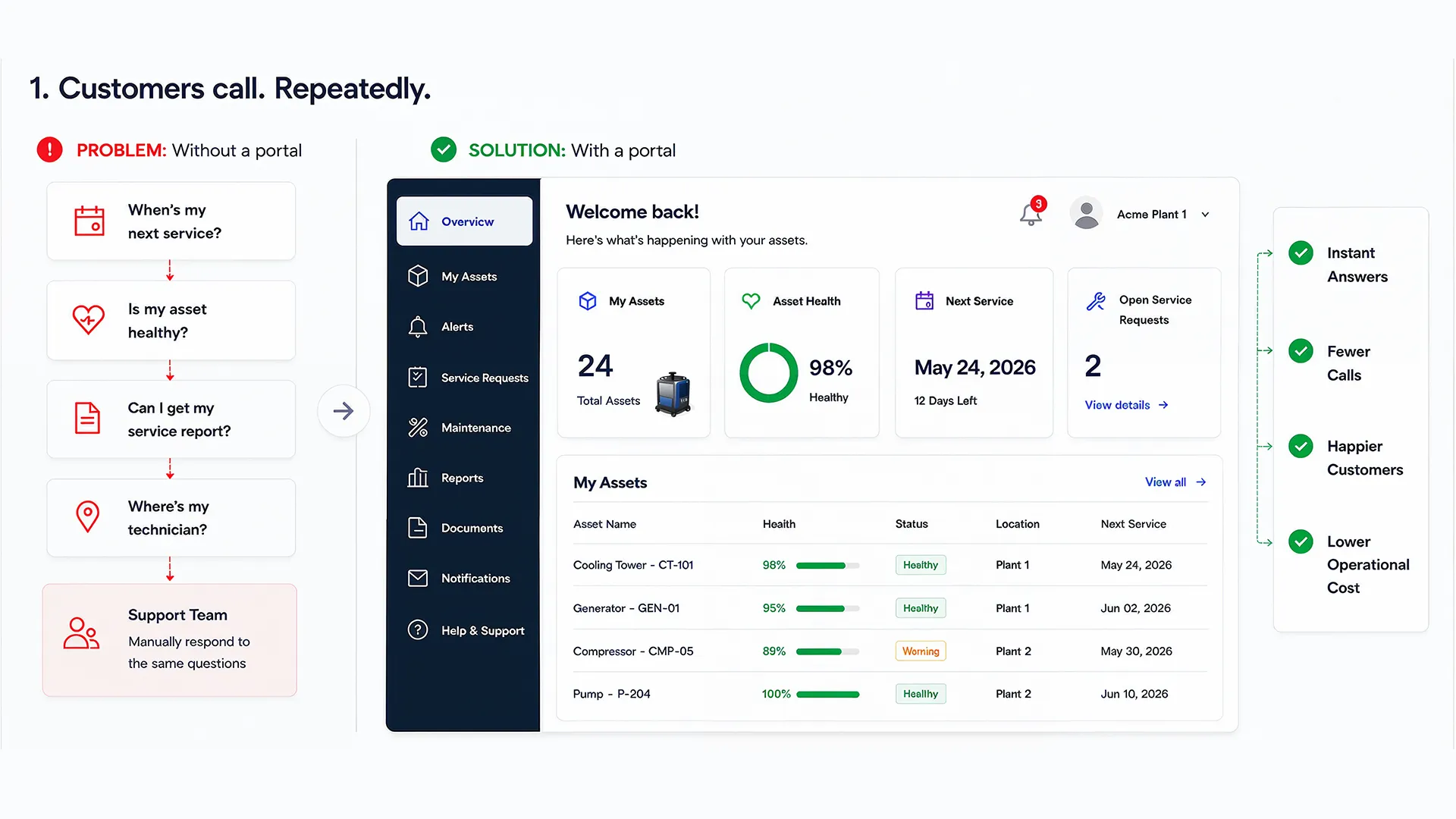
1. Customers call. Repeatedly.
Without a portal, every customer question — 'when's my next service?', 'is my asset healthy?', 'where's my technician?' — becomes a phone call. Operations cost up, NPS down.
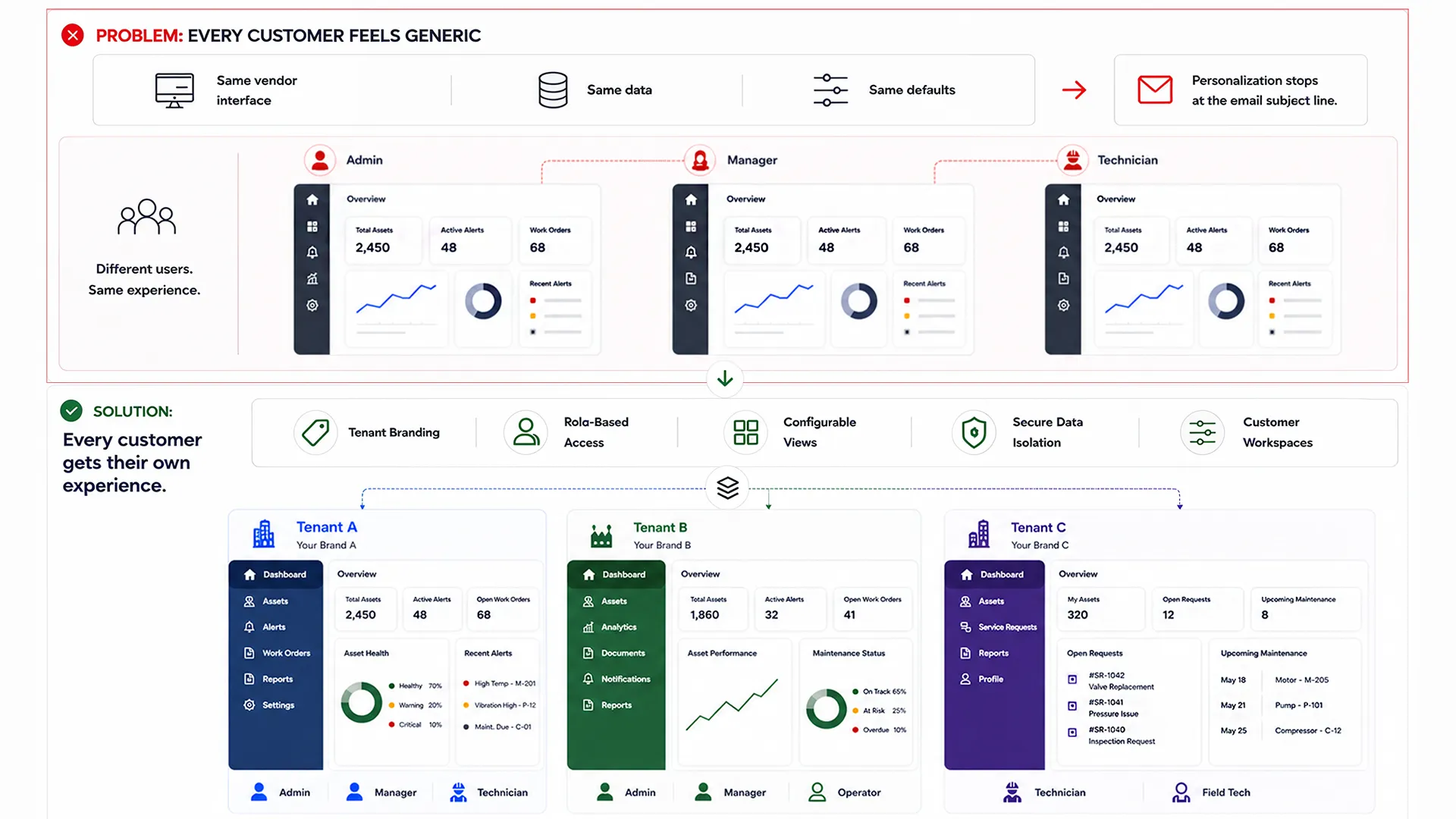
2. Every customer feels generic
Without multi-tenant branding and configurable views, customers see the same vendor interface, the same data, the same defaults. Personalization stops at the email subject line.
3. Outcomes promised, never proven
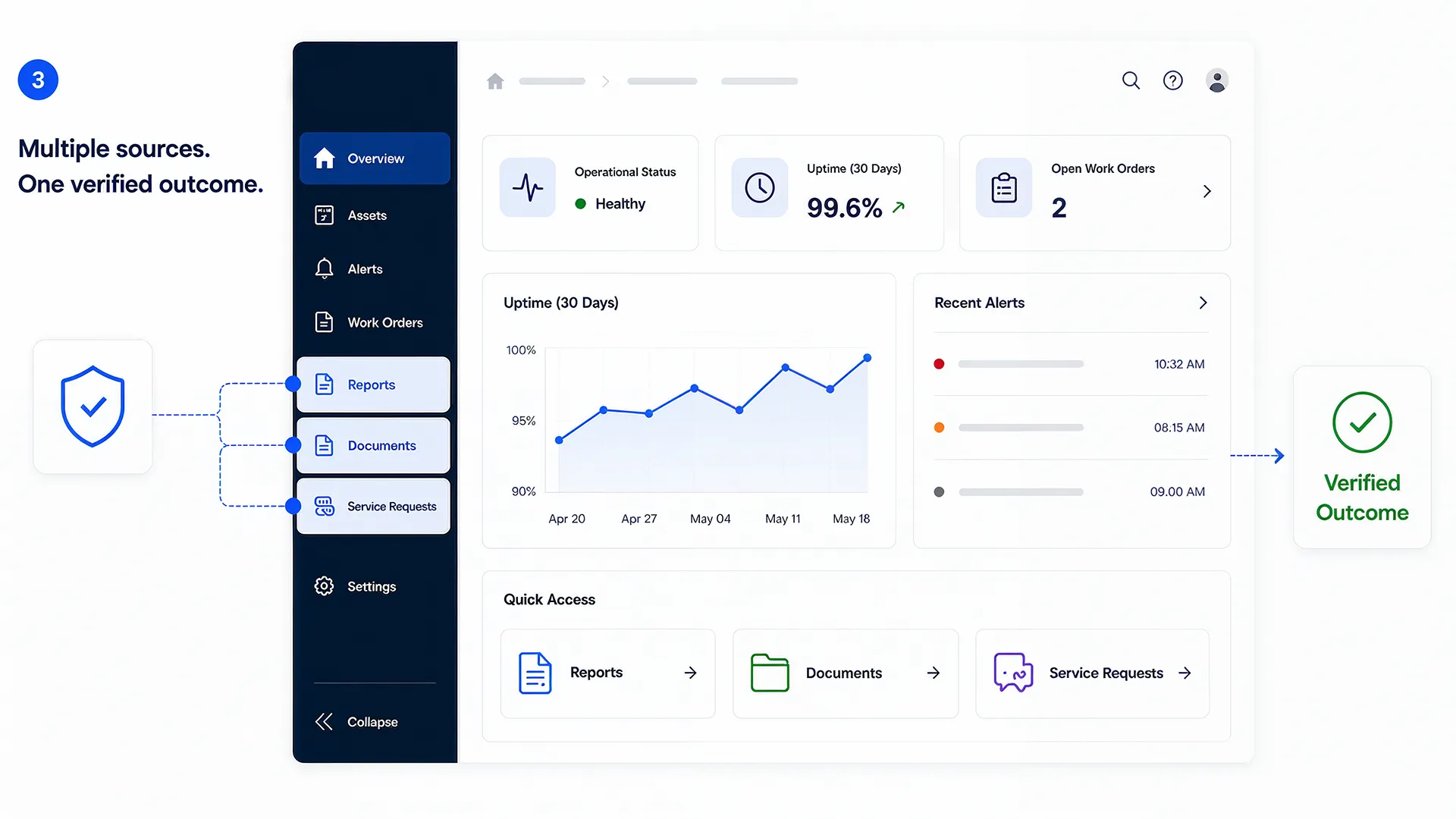
Outcome-based pricing requires shared, transparent proof. Without that, every uptime-guarantee or performance-SLA conversation ends with 'send us a report.'
Flex83 for Customer-Centric Industrial Solutions
.webp)
1. White-Label Customer Portal
Your brand, your domain, your tone. Every customer touchpoint — portal, email, mobile, API — carries your identity. Multi-tenant isolation is enforced at the platform layer.

2. Role and Tenant-Aware Views
Each customer (and each role inside the customer) sees only what you choose. Procurement sees contracts, operators see asset health, executives see SLA performance — same portal, different lenses.

3. Self-Service That Closes the Loop
Customers submit service requests, schedule maintenance windows, upgrade their tier, and download compliance reports — all without a phone call. Requests flow directly into your ops workflow.

4. Transparent Outcomes and SLAs
Outcome-based offers (uptime, throughput, energy) tracked automatically. SLA pass/fail shown live in the portal. The contract becomes verifiable, not contested.
NPS lift (typical)
reduction in inbound 'status' calls
increase in upsell rate
Customer Experience as a Product Feature
When the portal is good enough that customers prefer it to calling, the relationship becomes stickier and the upgrade path becomes obvious.
From Vendor to Trusted Partner
Transparent outcomes, shared data, and self-service shift the relationship from transactional to collaborative. Renewal stops being a negotiation.
From Pilot to Production in Weeks, Not Years
Weeks 1–2
Weeks 3–6
Weeks 7–12
Weeks 13–16
Weeks 17+
Resources
.webp)
.webp)
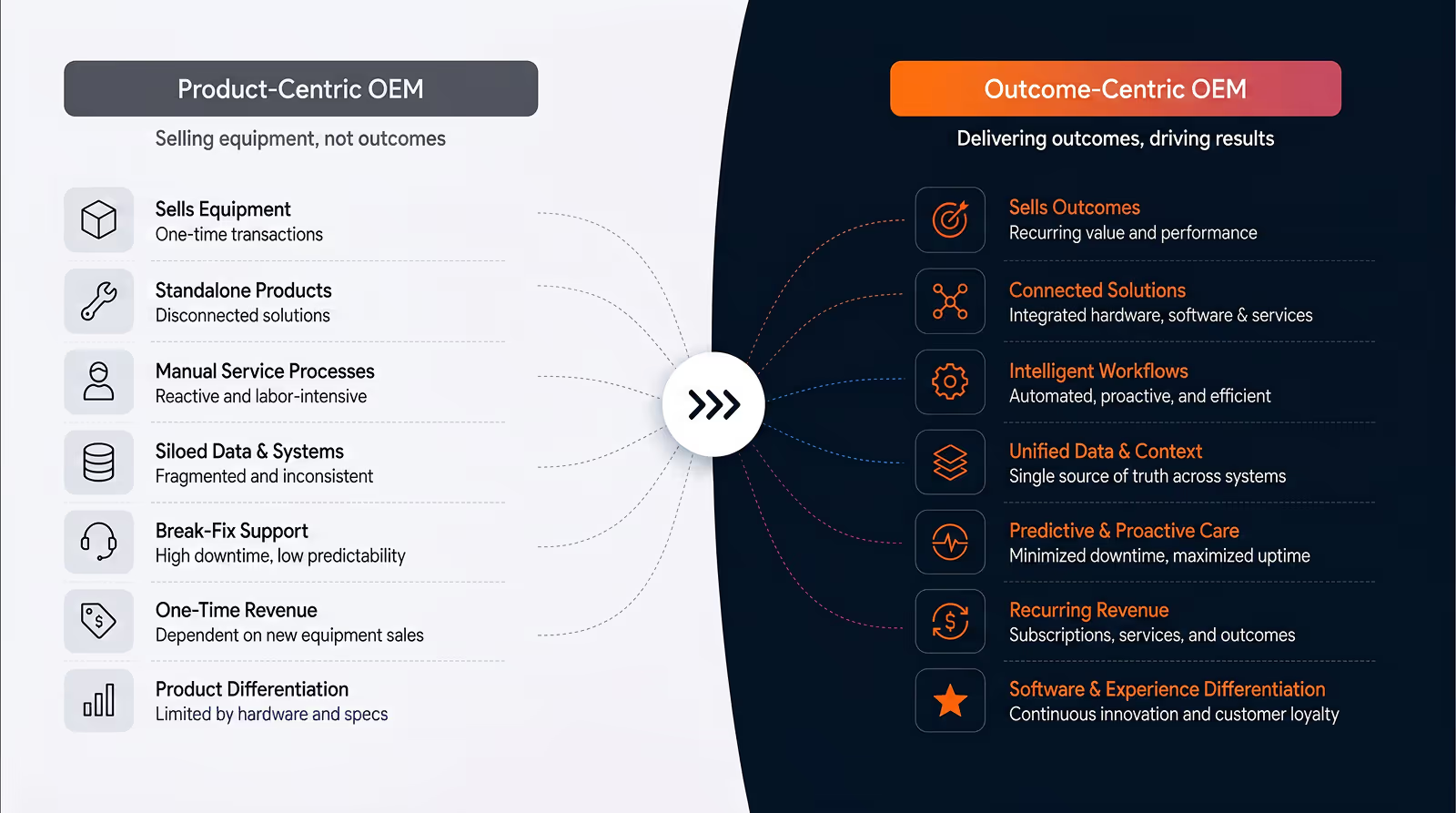
Industrial OEMs Are Becoming Software Companies — Most Haven’t Updated Their Platform Strategy Yet
Customers Who Recommend You Without Being Asked
Tell us about your customer segments, your current support model, and the experience gaps your renewal data is exposing. We'll map a customer-centric solution on Flex83.